
Why Propshaft Alignment Matters: Causes, Symptoms and Prevention
Published by Propshaft Master
A propshaft is designed to transfer torque efficiently between different components of a driveline. For this to happen smoothly, the shaft, universal joints and connected components must operate within the correct alignment and working angles.
Propshaft alignment plays an important role in driveline performance. When alignment is incorrect, additional loads can be placed on universal joints, centre bearings and other driveline components. The result may be increased vibration, accelerated wear and, if the underlying problem is left unresolved, premature component failure.
This is particularly important in mining equipment, commercial vehicles, agricultural machinery and other heavy-duty applications where drivelines operate under substantial loads and demanding conditions.
Understanding why propshaft alignment matters, how misalignment develops and how to recognise the warning signs can help maintenance teams address problems before they result in more extensive repairs or unplanned downtime.
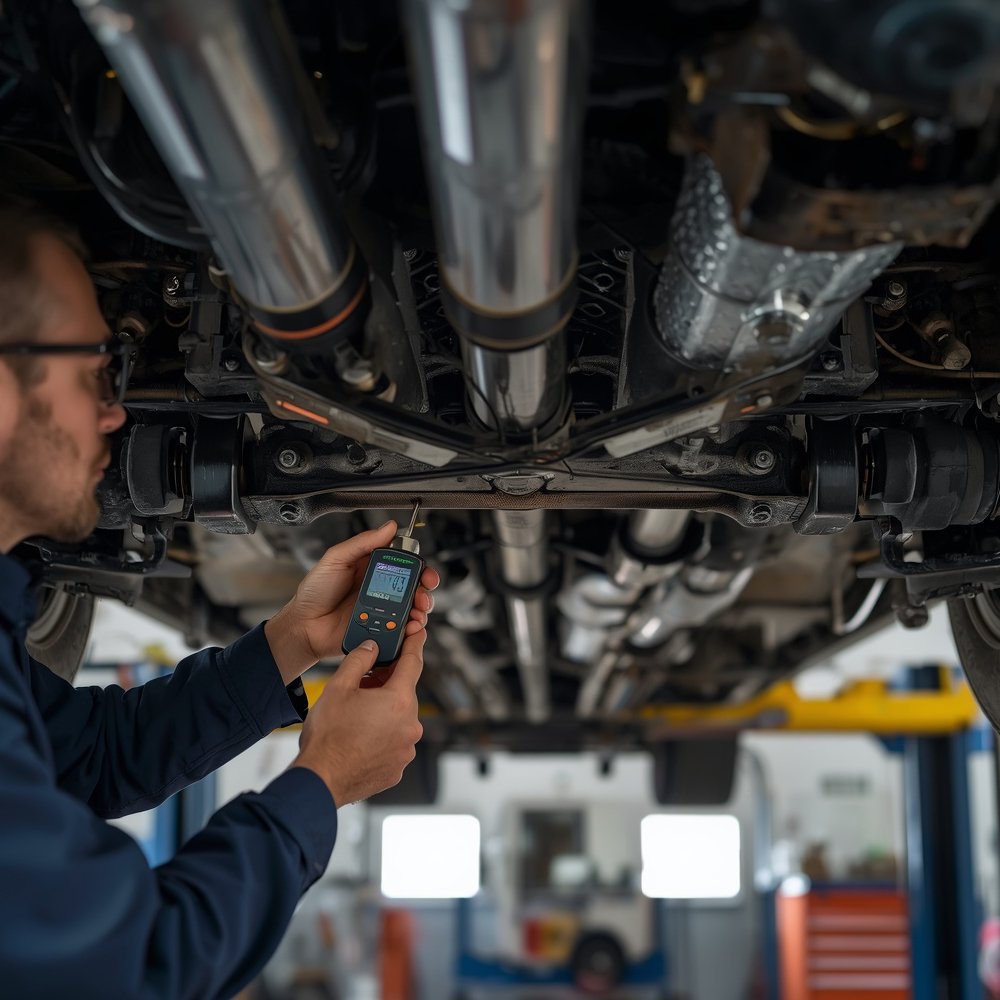
A professional technician carrying out a driveline inspection beneath a commercial vehicle, with the propshaft and surrounding components visible. Checking propshaft alignment, operating angles and driveline geometry can help identify potential causes of vibration, component wear and recurring driveline problems.
What Is Propshaft Alignment?
Propshaft alignment refers to the positioning of the propshaft in relation to the components it connects, typically the transmission or gearbox at one end and the differential or driven equipment at the other.
In practice, correct alignment does not necessarily mean that every component operates in a perfectly straight line.
Universal joints allow a propshaft to transmit torque between components positioned at different angles. The important factor is that these operating angles remain appropriate for the specific driveline design and that the shaft is correctly installed and phased.
Correct propshaft alignment allows the driveline to operate as intended while keeping unwanted forces and vibration under control.
Why Does Propshaft Alignment Matter?
A rotating propshaft experiences considerable forces during operation. As rotational speed and torque increase, relatively small problems within the driveline can become much more noticeable.
Correct alignment helps:
Maintain smooth torque transmission
Reduce unnecessary driveline vibration
Control loads placed on universal joints
Protect centre bearings and supporting components
Reduce stress on transmission and differential components
Prevent accelerated component wear
Support reliable driveline operation
When shaft misalignment occurs, the driveline may still continue operating, but components can be subjected to loads and movement they were not designed to accommodate continuously.
This is why alignment should be considered as part of the complete driveline system rather than simply the position of the propshaft itself.
Understanding Driveshaft Angles
One of the most important factors affecting propshaft alignment is the operating angle of the shaft and its universal joints.
A driveshaft angle is created when the transmission output, propshaft and differential input are not positioned along exactly the same axis.
Some angular difference is normal. In fact, conventional universal joints require an appropriate operating angle to function correctly.
Problems arise when these angles become excessive or when the relationship between the angles at each end of the propshaft is incorrect.
An unsuitable driveline angle can contribute to uneven rotational velocity through the universal joints, which may result in vibration and additional loading of driveline components.
For this reason, driveshaft and universal joint angles need to be considered together when diagnosing alignment-related problems.
Why Universal Joint Angles Matter
A universal joint allows torque to pass between shafts operating at an angle to one another.
However, a conventional universal joint does not maintain perfectly constant rotational velocity when operating at an angle. As the joint rotates, small variations in rotational speed occur.
In a correctly configured driveline, the geometry of the system allows these variations to be managed so that smooth power transmission is maintained.
If a universal joint angle is excessive or the relationship between the joints is incorrect, these rotational variations can become more pronounced. This may contribute to:
Driveline vibration
Increased universal joint wear
Bearing wear
Noise
Additional stress on connected components
Correct driveline geometry is therefore an important part of maintaining reliable universal joint operation.
Propshaft Alignment vs Propshaft Phasing
Alignment and phasing are closely related, but they are not the same thing.
Propshaft alignment concerns the position and operating geometry of the shaft relative to the components it connects.
Propshaft phasing refers to the rotational relationship between the universal joint yokes at each end of the shaft.
On a correctly phased propshaft, the yokes are positioned according to the intended driveline configuration. If a shaft is assembled incorrectly after repair or maintenance, the yokes may become out of phase.
Incorrect driveshaft phasing can cause rotational irregularities that result in vibration even when the propshaft itself is correctly balanced.
This is why both alignment and phasing should be considered when diagnosing persistent driveline vibration.
What Causes Propshaft Misalignment?
Several mechanical and operational factors can alter driveline geometry.
Worn or Damaged Mountings
Engine, gearbox, transmission and differential mountings help maintain the intended position of driveline components.
As these mounts deteriorate, components can shift from their original positions and alter propshaft operating angles.
Suspension Changes
Ride height directly influences driveline geometry.
Worn suspension components, modified suspension systems or changes in vehicle ride height can alter the angle between the transmission, propshaft and differential.
This can be particularly relevant on commercial vehicles and specialised heavy equipment where suspension configurations may change according to load.
Incorrect Installation
A propshaft that has been removed for maintenance or repair must be reinstalled correctly.
Incorrect positioning, assembly or phasing can introduce vibration that was not present before the work was carried out.
Damaged Driveline Components
Bent brackets, worn centre bearings, damaged universal joints and other mechanical faults can affect the position of the propshaft.
Correcting the alignment without addressing these underlying problems may therefore provide only a temporary solution.
Chassis or Structural Movement
Heavy-duty vehicles and equipment operate under substantial loads.
Damage, deformation or changes to supporting structures can alter the relationship between driveline components and contribute to misalignment.
Signs of Incorrect Propshaft Alignment
Problems with alignment often produce symptoms elsewhere in the driveline.
Common warning signs include:
Propshaft vibration
Vibration that increases with vehicle or shaft speed
Unusual noise from beneath the vehicle
Accelerated universal joint wear
Repeated centre bearing failure
Uneven wear on driveline components
Clunking or knocking
Premature seal or bearing wear
Recurring driveline problems after component replacement
Not every instance of driveshaft vibration is caused by alignment, which is why accurate diagnosis is important.
Propshaft imbalance, worn universal joints, damaged centre bearings and other faults can produce similar symptoms.
How Misalignment Can Cause Driveline Vibration
Driveline vibration is one of the most common indications that something within the rotating assembly is not operating correctly.
When driveline angles are incorrect, universal joints may produce uneven rotational forces. These forces travel through the propshaft and surrounding components and can be felt as vibration through the chassis or vehicle.
The severity may change according to:
Vehicle speed
Propshaft rotational speed
Load
Acceleration
Suspension position
Operating angle
This information can help an experienced technician narrow down the potential source of the problem.
Persistent vibration should be investigated promptly. Continuing to operate equipment with significant vibration can place additional stress on bearings, universal joints, seals and mounting points.
How Misalignment Affects Universal Joints
Universal joints are particularly sensitive to incorrect driveline geometry.
When operating angles are unsuitable, the bearings inside the universal joint can experience increased loading. Over time, this may accelerate wear within the cross and bearing assembly.
Possible consequences include:
Bearing deterioration
Excessive play
Increased friction
Lubrication problems
Heat generation
Noise
Premature universal joint failure
If universal joints repeatedly fail despite being replaced with suitable components, the underlying driveline geometry should be investigated rather than simply replacing the joint again.
How Misalignment Affects Centre Bearings
Two-piece and multi-piece propshafts often use centre bearings to support the rotating shaft.
Incorrect alignment can place additional radial or axial loads on these bearings and their rubber support assemblies.
This can contribute to:
Damaged rubber mountings
Bearing noise
Excessive shaft movement
Vibration
Premature centre bearing failure
Repeated centre bearing problems can therefore indicate a wider driveline issue rather than a fault with the bearing alone.
Propshaft Alignment vs Propshaft Balancing
Propshaft alignment and propshaft balancing address different problems.
Alignment concerns the geometry and positioning of the propshaft and connected driveline components.
Balancing concerns the distribution of mass around the rotating shaft.
A propshaft with uneven mass distribution can create centrifugal forces as it rotates. Driveshaft balancing corrects these imbalances so the shaft can rotate more smoothly.
Importantly, a correctly balanced propshaft can still vibrate if its alignment or operating angles are incorrect.
Similarly, correcting alignment will not eliminate vibration caused by an imbalanced shaft.
For this reason, professional vibration diagnosis may require technicians to investigate both alignment and balance rather than assuming one is responsible for the problem.
How Is Propshaft Alignment Checked?
Checking propshaft alignment involves examining the complete driveline rather than inspecting the shaft in isolation.
Depending on the vehicle or application, technicians may assess:
Transmission or gearbox position
Differential or driven component position
Propshaft operating angles
Universal joint angles
Propshaft phasing
Centre bearing position
Engine and transmission mountings
Chassis mounting points
Suspension condition
Propshaft condition
Specialised measuring equipment can be used to determine driveline angles accurately.
The measurements can then be compared with the intended geometry or relevant manufacturer specifications for the application.
How Is Incorrect Propshaft Alignment Corrected?
The appropriate solution depends on what caused the misalignment.
Corrective work may involve:
Repositioning driveline components
Replacing damaged mountings
Correcting centre bearing position
Repairing damaged brackets
Correcting propshaft phasing
Repairing or replacing worn universal joints
Addressing suspension problems
Correcting installation errors
Repairing or replacing damaged propshaft components
If the propshaft itself has been repaired or modified, propshaft balancing may also be required before it is returned to service.
The important principle is to correct the underlying cause rather than simply treating the resulting vibration.
Preventing Propshaft Alignment Problems
Alignment problems cannot always be prevented, particularly on equipment operating in demanding environments. However, preventative maintenance can significantly reduce the risk of minor issues developing into major driveline problems.
Maintenance teams should:
Inspect propshafts during scheduled servicing
Monitor universal joints for excessive wear
Check centre bearings and rubber mountings
Investigate vibration as soon as it develops
Inspect transmission and differential mountings
Check driveline geometry following suspension repairs
Ensure propshafts are correctly installed after maintenance
Maintain correct propshaft phasing
Dynamically balance repaired or manufactured propshafts where required
For mining, construction and other heavy-duty applications, inspections may need to be carried out more frequently because of high loads, contamination and demanding operating conditions.
Why Early Diagnosis Matters
One of the challenges with propshaft alignment problems is that the first symptom may appear in another component.
A universal joint may fail. A centre bearing may deteriorate. A vibration may develop.
Replacing the affected component can temporarily resolve the immediate problem, but if shaft misalignment remains, the replacement component may also experience accelerated wear.
A complete driveline inspection helps identify the root cause rather than repeatedly treating individual symptoms.
This approach is particularly important for commercial fleets and industrial operators where repeated repairs can result in unnecessary maintenance costs and equipment downtime.
Professional Propshaft Alignment and Driveline Inspection
Accurate diagnosis is essential when dealing with alignment-related driveline problems.
At Propshaft Master, we inspect propshafts and associated driveline components to identify vibration, wear, incorrect operating geometry and other issues that may affect reliability.
Our driveline services include propshaft inspection, repairs, custom manufacturing, dynamic balancing and engineering support for mining, transport, agricultural and industrial applications.
By examining the complete driveline rather than focusing on a single failed component, our team can help identify the underlying cause of recurring vibration or premature component wear and determine the appropriate repair solution.
Conclusion
Correct propshaft alignment is fundamental to smooth and reliable driveline operation. Appropriate operating angles, correct propshaft phasing and properly positioned driveline components all contribute to efficient torque transmission while controlling vibration and unnecessary component loads.
When alignment is incorrect, the effects can extend beyond the propshaft itself. Universal joints, centre bearings, mountings and other driveline components may experience accelerated wear, while persistent vibration can indicate a developing mechanical problem.
Regular inspection and early investigation of unusual vibration, noise or repeated component failure can help identify alignment problems before they result in more extensive damage.
For heavy-duty vehicles, mining equipment and industrial applications, maintaining correct driveline geometry should form part of a broader preventative maintenance strategy.
If you are experiencing driveline vibration, recurring universal joint or centre bearing problems, or suspect that your propshaft may be incorrectly aligned, contact Propshaft Master for professional inspection and driveline engineering support.
FAQs
-
Propshaft alignment refers to the positioning and operating geometry of a propshaft relative to the transmission, differential and other components it connects. Correct alignment helps maintain suitable universal joint operating angles, smooth torque transmission and reliable driveline performance.
-
Common signs include driveline vibration, unusual noise, accelerated universal joint wear, repeated centre bearing problems and excessive wear on other driveline components. Symptoms may become more noticeable at certain speeds, under acceleration or when equipment is operating under load.
-
Yes. Incorrect propshaft alignment can alter universal joint operating angles and introduce uneven rotational forces into the driveline. This may result in propshaft or driveline vibration that changes according to rotational speed, vehicle speed or operating load.
-
Propshaft misalignment can result from worn engine or transmission mounts, suspension changes, damaged brackets, incorrect installation, centre bearing problems or structural movement. Because several components determine driveline geometry, identifying the underlying cause usually requires inspection of the complete system.
-
Propshaft alignment concerns the position, geometry and operating angles of the shaft, while propshaft balancing concerns how mass is distributed around the rotating shaft. Either problem can cause vibration, so professional diagnosis may involve checking both alignment and balance.
-
Propshaft phasing refers to the rotational relationship between the universal joint yokes within a propshaft assembly. Correct phasing helps the universal joints work together as intended. Incorrect propshaft or driveshaft phasing can contribute to vibration even when the shaft is correctly balanced.
-
Incorrect driveline geometry can place additional loads on universal joints and contribute to accelerated wear. Repeated universal joint problems can therefore indicate a wider issue involving propshaft alignment, operating angles or other driveline components.
Keep Your Driveline Performing at Its Best
At Propshaft Master, we specialise in the inspection, repair and replacement of universal joints for mining, industrial, commercial and agricultural applications. Combined with expert propshaft repairs, dynamic balancing and complete driveline engineering services, our experienced team delivers reliable solutions that keep equipment operating safely and efficiently.