
What Is a Driveshaft Centre Bearing? Signs of Wear, Failure and Replacement
Published by Propshaft Master
A driveshaft centre bearing is one of the most important supporting components within a heavy-duty driveline system. Although it is often overlooked, it plays a critical role in supporting the propshaft, reducing vibration and ensuring smooth, reliable power transmission between the transmission and differential.
Over time, centre bearings are subjected to constant loads, rotational forces and harsh operating conditions. As they wear, they can introduce vibration, noise and driveline instability, potentially leading to damage to surrounding components if left unaddressed.
Whether fitted to mining equipment, commercial vehicles, agricultural machinery or industrial applications, understanding how a driveshaft centre bearing works and recognising the early signs of failure can help prevent costly repairs and minimise equipment downtime.
In this guide, we'll explain what a centre bearing is, how it works, the common causes of failure and when professional repair or replacement is the best solution.
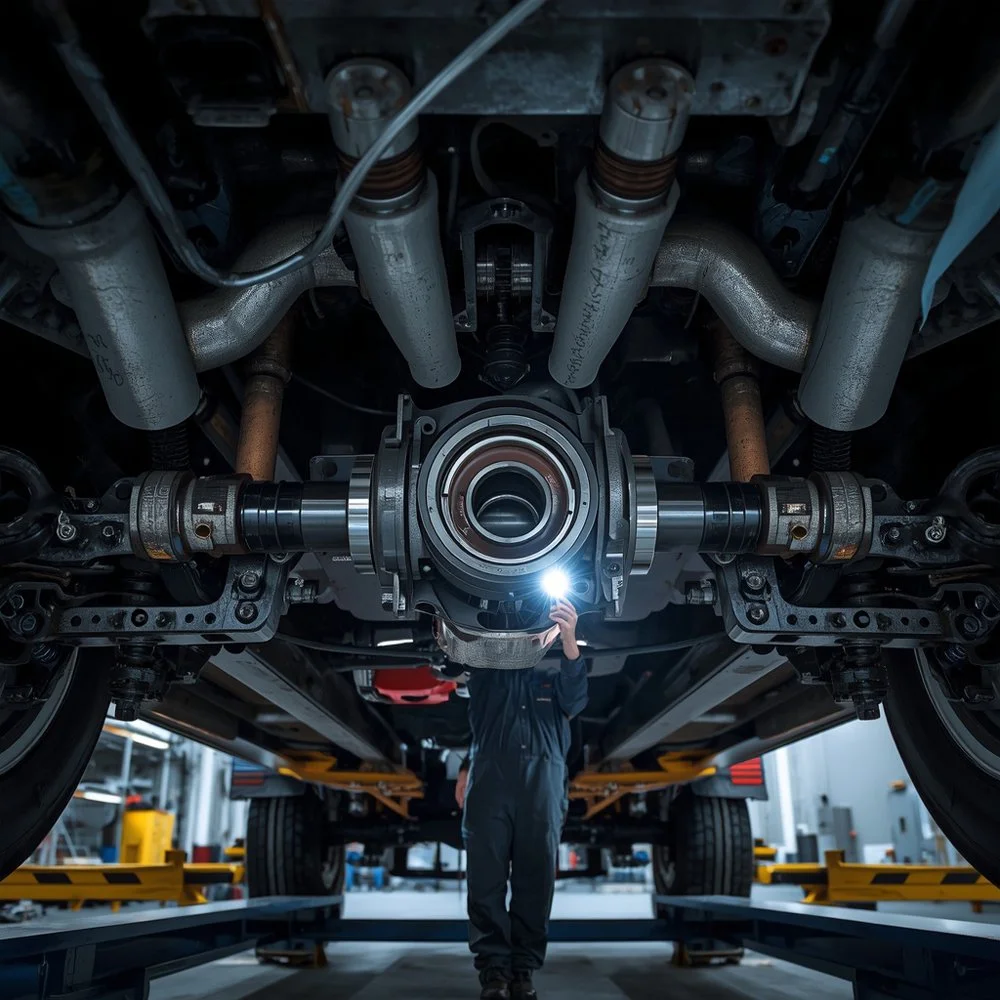
A technician inspecting the driveshaft centre bearing and two-piece propshaft beneath a heavy-duty commercial vehicle. Regular inspections help identify wear early, reduce driveline vibration and improve the reliability of heavy-duty equipment.
What Is a Driveshaft Centre Bearing?
A driveshaft centre bearing, also known as a propshaft centre bearing, carrier bearing or centre support bearing, is a support assembly fitted to longer propshafts to stabilise the rotating shaft.
Rather than allowing the entire propshaft to span the distance between the transmission and differential unsupported, the centre bearing provides additional support, reducing shaft deflection and maintaining correct driveline alignment.
The centre bearing typically consists of:
A precision ball bearing
A rubber mounting
A metal support bracket
Seals to protect the bearing from contamination
Together, these components allow the propshaft to rotate freely while absorbing vibration and supporting the shaft under varying operating conditions.
How Does a Centre Bearing Work?
When a vehicle or machine is in operation, the propshaft rotates at high speed to transfer torque from the transmission to the differential.
On longer driveline assemblies, the shaft requires additional support to prevent excessive movement and vibration.
The centre bearing supports the propshaft while allowing it to rotate freely.
The surrounding rubber mounting absorbs small movements and isolates vibration, helping maintain smooth operation throughout the driveline.
Without this support, longer propshafts would flex excessively, increasing stress on universal joints, slip joints and transmission components.
Where Is a Centre Bearing Located?
Centre bearings are normally found on two-piece propshaft assemblies used in:
Heavy commercial vehicles
Mining equipment
Agricultural machinery
Construction equipment
Buses and coaches
Rail applications
Industrial machinery
The centre bearing is positioned approximately halfway along the propshaft and is secured to the chassis using a heavy-duty mounting bracket.
This creates two shorter shaft sections instead of one long unsupported shaft, significantly improving stability.
Why Is a Centre Bearing Important?
Although relatively small, the centre bearing performs several important functions within the driveline.
These include:
Supporting the rotating propshaft
Maintaining correct shaft alignment
Reducing driveline vibration
Minimising shaft deflection
Protecting universal joints from excessive stress
Improving operator comfort
Extending the service life of driveline components
A worn centre bearing affects the performance of the entire driveline system rather than just the bearing itself.
Common Causes of Centre Bearing Failure
Like any rotating component, centre bearings wear gradually over time.
Several factors can accelerate this process.
Normal Wear
Continuous rotation eventually wears the bearing surfaces and reduces the effectiveness of the rubber mounting.
Contamination
Dust, water, mud and other contaminants can enter damaged seals, reducing lubrication and accelerating bearing wear.
Mining, agricultural and construction equipment are particularly susceptible to contamination.
Excessive Driveline Vibration
Persistent driveshaft vibration caused by imbalance or worn universal joints places additional stress on the centre bearing.
Without correcting the root cause, replacement bearings may also fail prematurely.
Damaged Rubber Mounting
The rubber support surrounding the bearing absorbs movement during operation.
Over time it can crack, harden or separate from the bearing assembly, reducing its ability to isolate vibration.
Overloading
Vehicles operating under constant heavy loads or harsh operating conditions experience greater stress throughout the driveline, increasing bearing wear.
Misalignment
Incorrect driveline angles or damaged mounting brackets can force the bearing to operate under abnormal loads, reducing service life.
Signs and Symptoms of a Worn Centre Bearing
A failing driveshaft centre bearing often produces warning signs before complete failure occurs.
Common symptoms include:
Driveline vibration
Humming or rumbling noises
Clunking during acceleration
Vibration at higher speeds
Excessive movement within the propshaft
Uneven driveline operation
Visible damage to the rubber mounting
Metallic noises beneath the vehicle
These symptoms should never be ignored, as they often indicate progressive bearing deterioration.
Can a Worn Centre Bearing Cause Vibration?
Yes.
A worn carrier bearing is one of the most common causes of driveline vibration in vehicles fitted with two-piece propshafts.
As the bearing wears, the propshaft is no longer properly supported.
This allows excessive movement within the shaft, creating vibration that becomes increasingly noticeable as rotational speed increases.
In many cases, centre bearing wear is accompanied by worn universal joints or propshaft imbalance.
Professional inspection helps identify all contributing factors before repairs are carried out.
How to Inspect a Centre Bearing
Routine inspection helps identify wear before it develops into more serious driveline problems.
During an inspection, technicians should check for:
Excessive bearing play
Damaged rubber supports
Cracked mounting brackets
Oil contamination
Rust around the bearing
Bearing noise
Propshaft alignment
Evidence of vibration damage
Inspections should also include surrounding driveline components such as universal joints and slip joints.
Centre Bearing Repair vs Replacement
In most cases, worn centre bearings are replaced rather than repaired.
Replacement is recommended when:
The bearing has excessive play
The rubber mounting has failed
Bearing noise is present
Seals have deteriorated
Corrosion has damaged the assembly
Because the centre bearing forms part of the complete driveline system, replacement should always be accompanied by an inspection of the propshaft, universal joints and driveline alignment.
Where vibration has been present, professional driveline balancing may also be recommended to restore smooth operation.
Preventative Maintenance Tips
Regular maintenance significantly extends the service life of centre bearings.
Best practices include:
Inspecting the bearing during scheduled servicing
Monitoring for unusual vibration
Investigating driveline noise promptly
Inspecting rubber mountings for deterioration
Checking propshaft alignment
Replacing worn universal joints before they damage the bearing
Professionally balancing repaired propshafts
Following manufacturer maintenance schedules
Preventative maintenance remains considerably more economical than repairing extensive driveline damage.
When Should You Seek Professional Assistance?
Professional inspection is recommended if you notice:
Persistent driveline vibration
Humming or rumbling noises beneath the vehicle
Visible movement within the propshaft
Damaged rubber mountings
Bearing noise during operation
Excessive driveline movement
Signs of surrounding driveline wear
Addressing these symptoms early helps prevent additional damage to the propshaft, universal joints and transmission components.
Professional Centre Bearing Inspection & Replacement
Replacing a centre bearing requires more than simply installing a new component.
Professional driveline specialists inspect the complete propshaft assembly to ensure there are no underlying issues contributing to premature bearing wear.
At Propshaft Master, we provide professional centre bearing inspections, replacement services, propshaft repairs, dynamic balancing and complete driveline engineering solutions. By addressing both the failed bearing and the root cause of the problem, we help customers restore reliable driveline performance while reducing the risk of future failures.
Conclusion
A driveshaft centre bearing plays a vital role in supporting the propshaft, maintaining correct alignment and reducing vibration throughout the driveline. Although often overlooked, a worn or damaged centre bearing can quickly affect the performance and reliability of the entire drivetrain.
By recognising the early warning signs, carrying out regular inspections and replacing worn components before failure occurs, operators can reduce downtime, extend equipment life and minimise costly repairs.
Whether you're maintaining mining equipment, commercial vehicles, agricultural machinery or industrial equipment, proactive centre bearing maintenance is an essential part of protecting your driveline investment. With professional inspection, quality replacement components and expert driveline engineering, Propshaft Master helps keep heavy-duty equipment operating safely, smoothly and efficiently.
FAQs
-
A driveshaft centre bearing supports longer propshaft assemblies, helping maintain correct alignment while reducing vibration and shaft movement during operation.
-
A centre bearing supports the rotating propshaft, absorbs vibration through its rubber mounting and helps ensure smooth, efficient power transmission throughout the driveline.
-
Common symptoms include driveline vibration, humming or rumbling noises, clunking during acceleration, excessive propshaft movement and visible deterioration of the rubber mounting.
-
Yes. A worn centre bearing is one of the most common causes of driveline vibration in vehicles fitted with two-piece propshafts. As the bearing deteriorates, the propshaft loses support, resulting in increased movement and vibration.
-
In most cases, centre bearings are replaced rather than repaired. A professional inspection will determine whether the bearing alone requires replacement or whether additional driveline components have also been affected.
-
Centre bearing failure is commonly caused by normal wear, contamination, excessive driveline vibration, damaged rubber mountings, misalignment and heavy operating conditions.
-
Centre bearings should be inspected during routine servicing or whenever driveline vibration, unusual noises or propshaft movement are noticed. Equipment operating in demanding environments may require more frequent inspections.
Keep Your Driveline Performing at Its Best
At Propshaft Master, we specialise in the inspection, repair and replacement of universal joints for mining, industrial, commercial and agricultural applications. Combined with expert propshaft repairs, dynamic balancing and complete driveline engineering services, our experienced team delivers reliable solutions that keep equipment operating safely and efficiently.