
What Is a Universal Joint? How It Works, Common Problems and Maintenance
Published by Propshaft Master
Universal joints are among the most important components within any driveline system, yet they're often overlooked until something goes wrong. These compact but highly engineered components allow power to be transmitted between rotating shafts while accommodating changes in angle caused by suspension movement, steering and drivetrain operation.
Whether fitted to heavy mining equipment, commercial trucks, agricultural machinery or industrial vehicles, a universal joint plays a critical role in ensuring smooth, reliable power transmission. When a universal joint becomes worn or damaged, it can lead to driveline vibration, unusual noises, reduced performance and, in severe cases, complete driveline failure.
Understanding how universal joints work, recognising the early signs of wear and following a preventative maintenance programme can significantly extend the life of your driveline and reduce costly downtime.
In this guide, we'll explain what a universal joint is, how it works, the most common causes of failure and the best practices for inspection, maintenance and replacement.
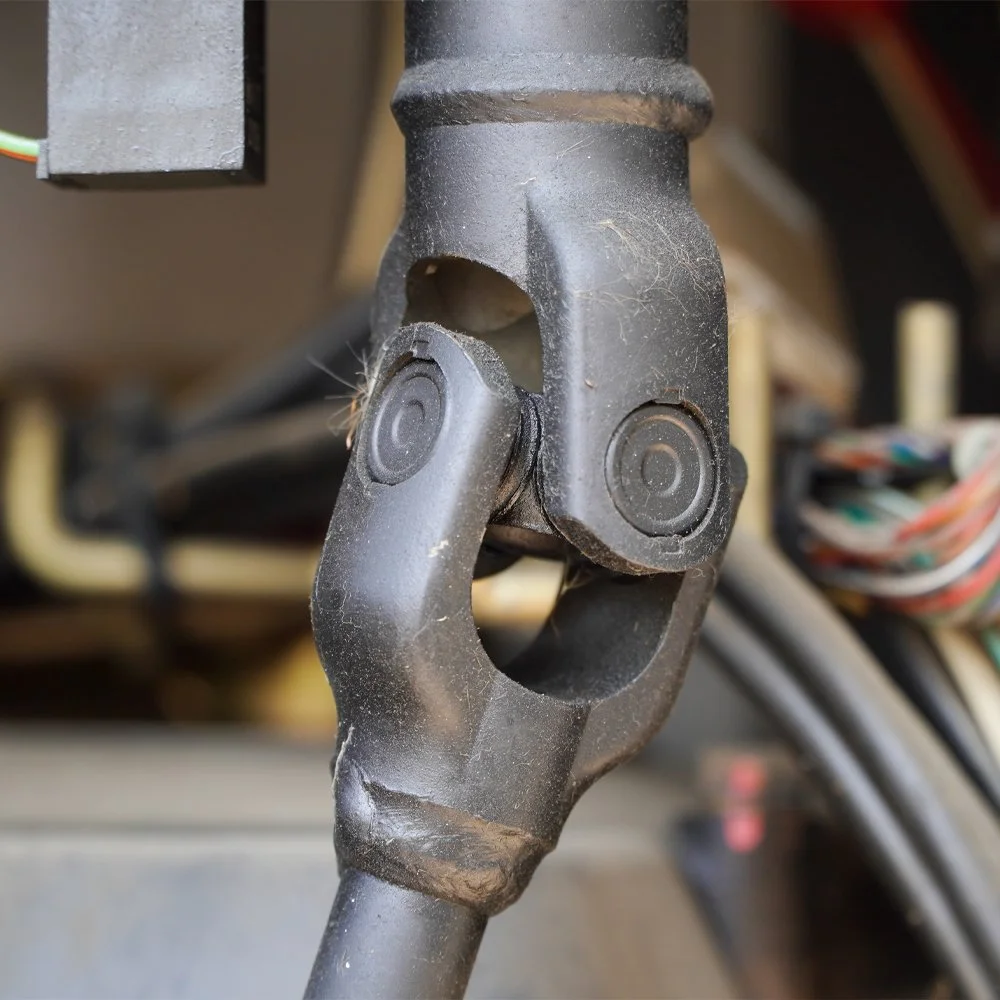
A heavy-duty universal joint installed within a commercial vehicle driveline. Universal joints allow propshafts and driveshafts to transmit power smoothly while accommodating changes in operating angle.
What Is a Universal Joint?
A universal joint, often referred to as a U-joint, is a flexible mechanical coupling that connects two rotating shafts while allowing them to operate at different angles.
Unlike a rigid connection, a universal joint compensates for movement within the driveline caused by suspension travel, chassis flex and changes in operating position. This flexibility allows torque to be transmitted efficiently without placing excessive stress on surrounding components.
Universal joints are commonly found in:
Heavy commercial vehicles
Mining equipment
Agricultural machinery
Construction equipment
Industrial machinery
Four-wheel-drive vehicles
Marine driveline systems
Without universal joints, the propshaft would be unable to accommodate movement between the transmission and differential, making smooth power delivery impossible.
How Does a Universal Joint Work?
A universal joint transfers rotational force between two shafts that are not perfectly aligned.
The joint consists of a central cross-shaped component, known as the cross and bearing assembly, with four bearing caps fitted to each arm. These bearing caps allow the joint to pivot while continuing to transmit torque from one shaft to another.
As the vehicle moves, suspension travel causes the angle between the transmission and differential to change constantly. The universal joint allows this movement without interrupting the transfer of power.
When operating correctly, the joint rotates smoothly with minimal friction. However, excessive wear, poor lubrication or contamination can increase resistance and create unwanted movement, leading to vibration and accelerated component wear.
Where Is a Universal Joint Located?
Universal joints are typically positioned at each end of the propshaft, connecting it to the transmission output shaft and the differential input flange.
Longer propshaft assemblies may include additional universal joints together with a centre bearing to support the shaft over greater distances.
Depending on the application, a vehicle may have:
Two universal joints
Three universal joints
Multiple joints within more complex driveline systems
Each joint must operate correctly for the driveline to remain balanced and reliable.
Types of Universal Joints
Although universal joints perform the same basic function, several designs are used depending on the application.
Cross-Type Universal Joint
The most common design used in commercial vehicles and industrial equipment. It consists of a forged cross with four precision bearing caps, offering strength, durability and excellent torque transmission.
Constant Velocity (CV) Joint
Often found in front-wheel-drive passenger vehicles, CV joints provide smoother power delivery at greater operating angles. While similar in purpose, CV joints differ significantly from traditional heavy-duty universal joints.
Heavy-Duty Universal Joints
Mining, agricultural and industrial machinery often use reinforced universal joints manufactured from high-strength alloy steels and designed to withstand extreme operating conditions, heavy loads and continuous use.
Common Causes of Universal Joint Failure
Like any mechanical component, universal joints are subject to wear over time.
The most common causes of failure include:
Insufficient Lubrication
Many universal joints rely on regular greasing to minimise friction between the bearing caps and cross assembly.
Without adequate lubrication, metal-to-metal contact accelerates wear and increases operating temperatures.
Contamination
Water, dust, mud and abrasive materials can penetrate damaged seals, contaminating the bearings and reducing service life.
This is particularly common in mining, construction and agricultural environments.
Excessive Operating Angles
Universal joints are designed to operate within specified angles.
Incorrect driveline alignment or suspension modifications can place excessive stress on the joint, accelerating wear and reducing efficiency.
Overloading
Heavy shock loads, excessive torque and harsh operating conditions place additional stress on the bearing assembly, increasing the likelihood of premature failure.
General Wear
Even under ideal operating conditions, universal joints eventually wear through normal use.
Routine inspection allows worn components to be identified and replaced before they fail.
Signs and Symptoms of a Worn Universal Joint
Recognising the early warning signs of a failing universal joint helps prevent more serious driveline damage.
Common symptoms include:
Driveline vibration
Clunking when changing gears
Knocking during acceleration
Squeaking at low speeds
Metallic clicking noises
Excessive movement within the joint
Uneven driveline operation
Difficulty maintaining smooth power delivery
If ignored, a worn universal joint can eventually fail completely, potentially damaging the propshaft, transmission and differential.
How to Inspect a Universal Joint
Routine inspections should form part of every preventative maintenance programme.
When inspecting a universal joint, technicians should check for:
Excessive free play
Rust around the bearing caps
Damaged grease seals
Missing grease fittings
Uneven bearing wear
Cracked yokes
Signs of overheating
Lubrication condition
Any movement outside the manufacturer's tolerances should be investigated further.
Universal Joint Maintenance and Lubrication
Regular maintenance is the most effective way to maximise universal joint service life.
Best practices include:
Greasing serviceable joints at recommended intervals
Using the correct lubricant
Inspecting seals for damage
Cleaning away accumulated dirt and debris
Checking driveline alignment
Inspecting during scheduled servicing
Replacing worn components promptly
Preventative maintenance is considerably more cost-effective than repairing a failed driveline.
Universal Joint Repair vs Replacement
Whether a universal joint can be repaired depends on the extent of the damage. Minor issues, such as worn bearing assemblies, can often be resolved by replacing the universal joint itself.
However, if wear has damaged the yokes, propshaft or surrounding driveline components, more extensive repairs may be required. Professional inspection ensures the correct solution is selected, preventing repeat failures and restoring reliable operation.
When Should You Seek Professional Assistance?
Professional inspection is recommended if you notice:
Persistent driveline vibration
Clunking during acceleration
Excessive play within the joint
Damaged or leaking bearing caps
Unusual driveline noises
Missing grease fittings
Visible corrosion or contamination
Attempting to continue operating equipment with a failing universal joint can significantly increase repair costs and create unnecessary downtime.
Why Professional Installation Matters
Replacing a universal joint involves more than simply fitting a new component.
Correct installation requires:
Accurate removal procedures
Precision fitting of bearing caps
Proper lubrication
Inspection of yokes and surrounding components
Verification of driveline alignment
Dynamic balancing where required
Professional installation helps ensure the repaired propshaft operates smoothly and reliably, reducing the risk of vibration or premature wear.
Conclusion
Universal joints are essential components within every driveline system, allowing power to be transmitted efficiently while accommodating the movement and operating angles encountered in real-world applications. Although compact in size, they have a significant influence on the performance, reliability and longevity of the complete driveline.
By understanding how universal joints work, recognising the early signs of wear and following a regular inspection and maintenance programme, operators can reduce unplanned downtime, improve equipment reliability and extend the service life of critical driveline components.
FAQs
-
A universal joint (U-joint) is a mechanical coupling that connects two rotating shafts while allowing them to operate at different angles. It enables smooth power transmission within a vehicle or industrial driveline system.
-
A universal joint uses a cross-shaped centre piece with four bearing caps to transfer rotational force between shafts that are not perfectly aligned, allowing the driveline to accommodate suspension movement and changing operating angles.
-
Universal joint failure is commonly caused by inadequate lubrication, contamination, excessive operating angles, heavy loads and normal wear over time. Regular inspection and maintenance help reduce the risk of premature failure.
-
Common symptoms include driveline vibration, clunking when changing gears, squeaking noises, excessive movement within the joint and knocking during acceleration.
-
In many cases, the universal joint itself can be replaced. However, if surrounding driveline components such as the yokes or propshaft have also been damaged, additional repairs may be required.
-
Lubrication intervals vary depending on the application and operating conditions. Heavy-duty equipment operating in harsh environments typically requires more frequent servicing than vehicles used under normal road conditions.
-
Yes. A worn or damaged universal joint is one of the most common causes of driveline vibration. Excessive play within the joint creates unwanted movement that becomes increasingly noticeable as vehicle speed increases.
Keep Your Driveline Performing at Its Best
At Propshaft Master, we specialise in the inspection, repair and replacement of universal joints for mining, industrial, commercial and agricultural applications. Combined with expert propshaft repairs, dynamic balancing and complete driveline engineering services, our experienced team delivers reliable solutions that keep equipment operating safely and efficiently.