
How Often Should Propshafts Be Inspected?
Published by Propshaft Master
Propshafts are among the hardest-working components in any driveline system. Responsible for transmitting rotational power from the transmission to the differential, they operate under constant torque, vibration and movement while enduring demanding operating conditions. Whether fitted to mining machinery, heavy commercial vehicles, agricultural equipment or industrial machinery, a well-maintained propshaft is essential for safe, reliable and efficient operation.
Like any mechanical component, however, propshafts are subject to wear. Universal joints deteriorate, centre bearings lose integrity, lubrication breaks down and damage can occur from harsh operating environments. Without regular inspections, these issues can develop unnoticed until they result in vibration, driveline failure or costly unplanned downtime.
Routine inspections are one of the most effective forms of preventative maintenance. By identifying wear before it becomes a serious problem, businesses can extend component life, improve equipment reliability and significantly reduce maintenance costs.
Whether you know the component as a propshaft or driveshaft, establishing a consistent inspection routine is one of the simplest ways to protect your equipment and maximise operational uptime.
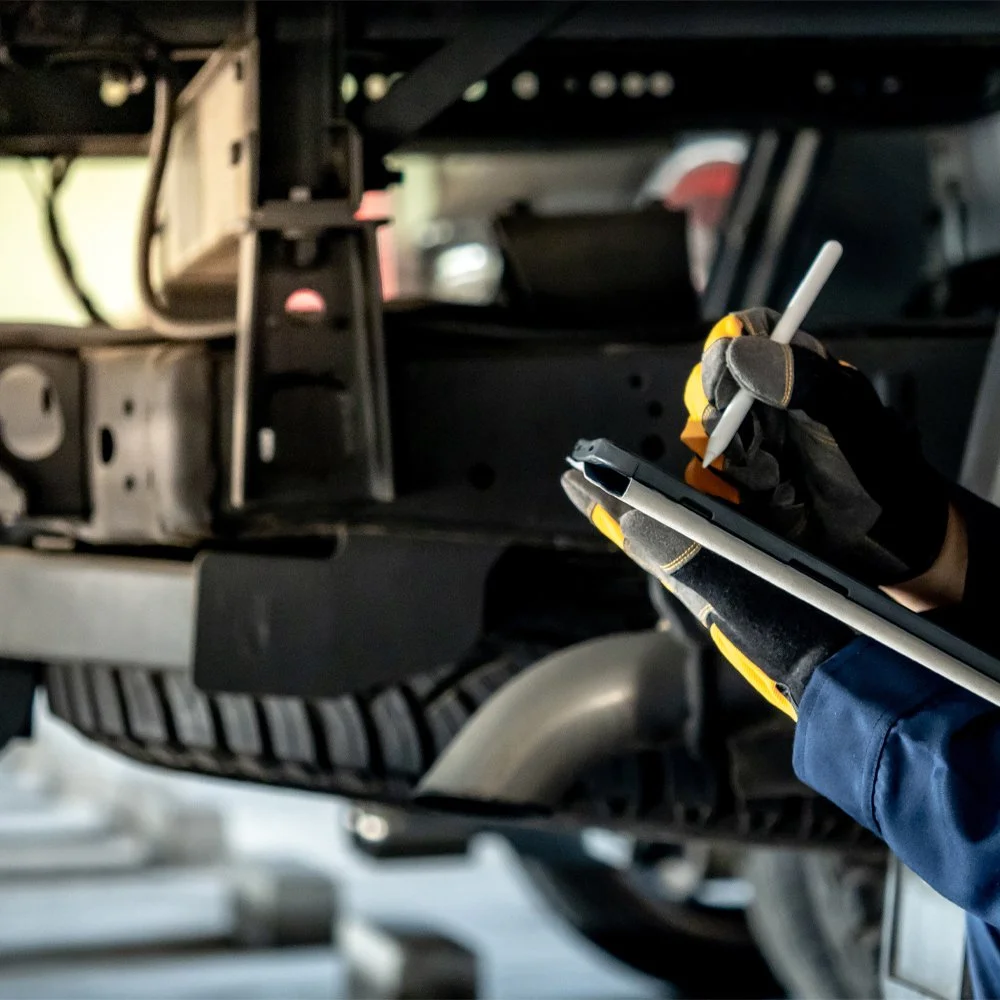
A qualified technician carrying out a routine propshaft inspection as part of a preventative maintenance programme for heavy commercial vehicles.
Why Regular Propshaft Inspections Matter
Many driveline failures don't happen suddenly. Instead, they develop gradually over hundreds or even thousands of operating hours.
A small amount of wear in a universal joint may initially cause little more than a slight vibration. Over time, that vibration places additional stress on the centre bearing, slip joint and transmission components. Eventually, what could have been resolved during a routine service develops into a major driveline failure.
Regular inspections help maintenance teams identify these problems before they escalate.
The benefits include:
Reduced unexpected breakdowns
Lower maintenance and repair costs
Improved equipment reliability
Longer component service life
Improved vehicle and operator safety
Reduced downtime
Better fleet productivity
For industries where equipment availability is critical, preventative inspections are considerably more cost-effective than emergency repairs.
How Often Should Propshafts Be Inspected?
There is no universal inspection interval that applies to every vehicle or machine. The appropriate inspection frequency depends on several factors, including operating conditions, load, mileage, manufacturer recommendations and the environment in which the equipment operates.
As a general guide:
The ideal inspection frequency depends on the type of equipment, operating conditions and manufacturer recommendations. The following guidelines provide a useful starting point.
Mining Equipment
Inspect before every shift or at least weekly, depending on operating hours and the severity of the operating environment.
Heavy Commercial Trucks
Inspect during every scheduled service, or approximately every 10,000–20,000 km, depending on the manufacturer's maintenance schedule.
Agricultural Machinery
Inspect before each operating season and include propshaft checks as part of routine servicing throughout the year.
Construction Equipment
Inspect during every scheduled preventative maintenance interval, with more frequent checks for machines operating in particularly harsh conditions.
Industrial Machinery
Follow the manufacturer's recommended maintenance schedule and increase inspection frequency where equipment operates continuously or under heavy loads.
Fleet Vehicles
Include propshaft inspections as part of every planned maintenance inspection to identify wear before it leads to unexpected downtime.
Equipment operating in particularly demanding environments—including underground mining, dusty conditions, heavy vibration, water crossings or corrosive environments—should be inspected more frequently than machinery operating under normal conditions.
Ultimately, inspection intervals should always complement the manufacturer's recommended maintenance schedule.
Factors That Affect Inspection Frequency
Not all equipment experiences the same operating conditions. Some applications place considerably greater stress on driveline components than others.
Several factors can increase the need for more frequent propshaft inspections.
Operating Environment
Dust, mud, water, chemicals and abrasive materials accelerate wear by contaminating bearings and lubrication points.
Mining and quarrying operations are particularly demanding due to constant exposure to dirt, moisture and heavy impacts.
Vehicle Load
Vehicles operating near their maximum payload place significantly greater stress on the driveline than lightly loaded vehicles.
Repeated heavy loading increases wear on universal joints, centre bearings and slip joints.
Operating Hours
Industrial equipment operating continuously throughout the day accumulates wear much faster than machinery used intermittently.
Inspection schedules should consider operating hours rather than mileage alone.
Terrain
Rough terrain, uneven surfaces and constant suspension articulation increase driveline movement and place additional stress on propshaft assemblies.
Off-road vehicles and earthmoving equipment typically require more frequent inspections.
What Should Be Checked During an Inspection?
A thorough inspection should evaluate the complete propshaft assembly rather than focusing on a single component.
Universal Joints
Universal joints are among the most common wear items within the driveline.
Inspect for:
Excessive free play
Rust-coloured dust around bearing caps
Damaged or missing seals
Dry grease points
Stiff movement
Cracked bearing caps
Replacing worn universal joints early can prevent far more expensive driveline repairs later.
Centre Bearings
Where fitted, centre bearings support longer propshaft assemblies and maintain driveline alignment.
Check for:
Excessive movement
Bearing noise
Damaged rubber supports
Misalignment
Oil contamination
Cracked mounting brackets
A worn driveshaft centre bearing often results in noticeable vibration throughout the vehicle.
Slip Joints
Slip joints allow the propshaft to compensate for suspension movement and changes in driveline length.
Inspect for:
Excessive spline wear
Corrosion
Binding movement
Lack of lubrication
Damaged seals
Proper lubrication is essential for smooth operation.
Propshaft Tube
The shaft itself should be carefully examined for structural damage.
Look for:
Dents
Cracks
Corrosion
Bent tubing
Missing balance weights
Weld damage
Even relatively small dents can affect balance and increase vibration.
Flanges and Fasteners
Inspect all mounting hardware.
Ensure:
Bolts remain correctly torqued
Flanges are secure
Bolt holes show no elongation
There are no signs of movement between mating surfaces
Loose fasteners can quickly lead to serious driveline damage.
Lubrication
Insufficient lubrication remains one of the leading causes of premature propshaft wear.
Inspect:
Grease nipples
Universal joints
Slip joints
Lubricant condition
Evidence of contamination
Following the correct lubrication schedule significantly extends component life.
Warning Signs Between Scheduled Inspections
Routine inspections should always be supported by monitoring changes in vehicle behaviour.
Common warning signs include:
Excessive driveshaft vibration
Unusual driveline noise
Clunking during acceleration or deceleration
Squeaking universal joints
Grease leaking from bearing caps
Visible corrosion
Shuddering under load
Excessive movement within the propshaft
These symptoms should never be ignored, as they often indicate developing component failure.
Best Practices for Preventative Maintenance
Routine inspections form only one part of an effective preventative maintenance programme.
Best practice includes:
Following manufacturer service schedules
Lubricating universal joints correctly
Inspecting centre bearings during every major service
Checking driveline alignment
Investigating vibration immediately
Recording inspection findings
Replacing worn components before failure occurs
Performing professional dynamic balancing after repairs
A structured maintenance programme not only improves reliability but also helps reduce total operating costs over the life of the equipment.
Repair or Replace?
Not every issue identified during an inspection requires a complete replacement.
Many propshaft problems can be resolved through professional repair services, including:
Universal joint replacement
Centre bearing replacement
Slip joint refurbishment
Dynamic balancing
Tube straightening
Complete propshaft rebuilding
Repairing components early is often significantly more economical than replacing an entire propshaft assembly after catastrophic failure.
However, severely bent, cracked or heavily corroded shafts may require complete replacement to restore safe and reliable operation.
A professional driveline inspection can determine the most cost-effective solution.
The Long-Term Benefits of Routine Inspections
Regular propshaft inspections provide benefits that extend far beyond preventing individual component failures.
Businesses that incorporate routine driveline inspections into their maintenance programmes often experience:
Improved fleet availability
Reduced operating costs
Increased equipment lifespan
Greater workplace safety
Fewer roadside breakdowns
Lower repair expenditure
More predictable maintenance planning
For organisations operating large fleets or heavy industrial equipment, these benefits translate directly into improved productivity and profitability.
Conclusion
Routine propshaft inspections are one of the simplest and most effective ways to improve driveline reliability and minimise costly downtime. By identifying worn components, lubrication issues and developing faults before they become serious failures, businesses can significantly extend the service life of their equipment while reducing repair costs.
Although inspection intervals vary depending on operating conditions, workload and manufacturer recommendations, every preventative maintenance programme should include regular propshaft inspections. Combined with correct lubrication, professional balancing and timely repairs, routine inspections help ensure that the entire driveline continues to operate safely and efficiently.
FAQs
-
Most propshafts should be inspected during every scheduled service. Equipment operating in harsh environments or under heavy loads may require inspections before every shift or at shorter maintenance intervals.
-
Common signs include excessive vibration, unusual driveline noise, clunking during acceleration, grease leakage, worn universal joints and damaged centre bearings.
-
A complete inspection should include the universal joints, slip joints, centre bearings, flanges, fasteners, propshaft tube and lubrication points.
-
Yes. Many propshaft issues can be repaired through services such as universal joint replacement, centre bearing replacement, dynamic balancing, tube straightening and complete propshaft rebuilding.
-
Routine inspections identify developing faults before they become major failures, helping reduce downtime, improve safety, extend component life and lower maintenance costs.
Keep Your Driveline Performing at Its Best
At Propshaft Master, we specialise in professional propshaft repairs, custom manufacturing, dynamic balancing and complete driveline solutions for the mining, transport, industrial, rail and marine sectors across Africa. Whether you require preventative maintenance or emergency repairs, our experienced team is ready to help keep your operations moving.