
What Is Driveline Balancing? Understanding Driveshaft Balancing and Why It Matters
Published by Propshaft Master
Every rotating component within a vehicle or industrial machine must operate smoothly to deliver reliable performance. In a driveline system, even a small imbalance can create vibration, increase component wear and place unnecessary stress on surrounding equipment. Over time, these issues can develop into costly repairs, unplanned downtime and reduced operational efficiency.
Driveshaft balancing, also known as driveline balancing or propshaft balancing, is the process of ensuring that a rotating propshaft assembly is perfectly balanced throughout its operating speed range. By eliminating imbalance, engineers can minimise vibration, improve reliability and extend the lifespan of critical driveline components.
Whether used in mining equipment, heavy commercial vehicles, agricultural machinery, rail applications or industrial equipment, professional driveline balancing plays an essential role in preventative maintenance and overall equipment performance.
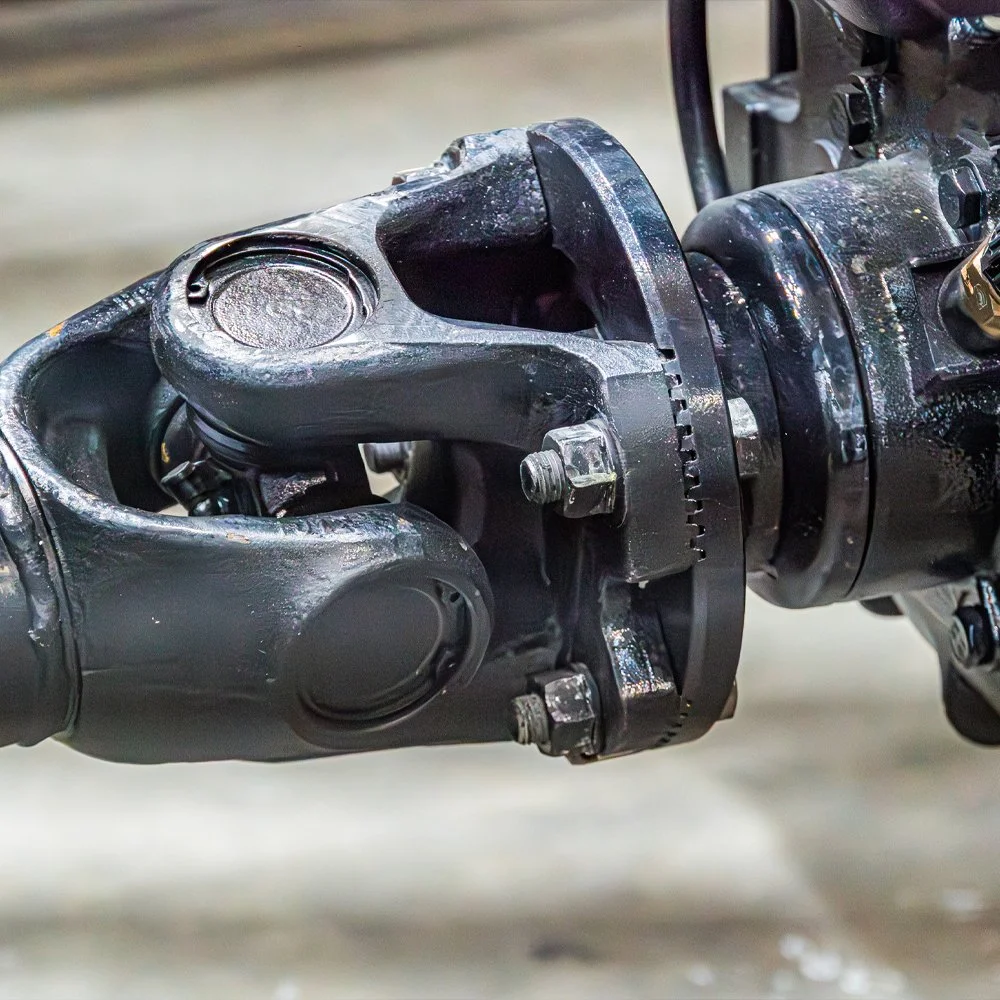
A close-up of a propshaft universal joint assembly. Professional driveline balancing helps eliminate vibration, improve performance and extend the service life of rotating driveline components.
What Is Driveline Balancing?
Driveline balancing is the process of correcting weight distribution across a rotating propshaft or driveshaft assembly to ensure it rotates smoothly at both low and high operating speeds.
During operation, a propshaft can rotate at several thousand revolutions per minute (RPM). At these speeds, even a slight imbalance can generate significant centrifugal forces that create vibration throughout the driveline.
Professional driveshaft balancing identifies these imbalances and corrects them by adding, removing or repositioning small balancing weights until the shaft rotates within precise engineering tolerances.
The result is a smoother-running driveline with reduced vibration, improved reliability and longer component life.
Why Is Driveline Balancing Important?
A balanced driveline does far more than eliminate vibration. It protects the entire power transmission system from unnecessary stress and premature wear.
An unbalanced propshaft places additional loads on surrounding components, including:
Universal joints
Centre bearings
Slip joints
Transmission output shafts
Differential pinion bearings
Axle assemblies
Gearboxes
Over time, these additional forces accelerate wear and increase the likelihood of expensive failures.
Professional dynamic balancing ensures power is transmitted efficiently while protecting the entire driveline system.
What Causes a Driveline to Become Unbalanced?
Several factors can cause a propshaft to lose its balance over time.
Normal Wear
Years of operation gradually wear universal joints, slip joints and centre bearings, altering the shaft's balance characteristics.
Impact Damage
Operating over rough terrain or striking obstacles can dent or bend the propshaft tube, creating imbalance.
This is particularly common in mining, construction and off-road applications.
Component Replacement
Replacing universal joints or other driveline components without rebalancing the complete assembly can alter weight distribution.
Even accurately manufactured replacement parts may slightly change the rotating mass.
Poor Repairs
Incorrect welding, misalignment or poor-quality repair work often introduces imbalance into the shaft.
Professional repair work should always be followed by driveshaft balancing to restore correct operating characteristics.
Corrosion and Material Loss
Rust, corrosion or damaged balance weights can gradually alter the shaft's balance over time.
Although these changes may appear minor, they become significant at high rotational speeds.
Common Signs of an Unbalanced Driveline
One of the earliest indicators of imbalance is vibration.
However, several symptoms may indicate that professional balancing is required.
These include:
Persistent driveline vibration
Steering wheel vibration
Floor or seat vibration
Unusual humming or droning noises
Clunking during acceleration
Premature universal joint wear
Excessive centre bearing wear
Increased gearbox vibration
Uneven wear on driveline components
Ignoring these warning signs can result in progressively more expensive repairs.
The Difference Between Static and Dynamic Balancing
Not all balancing methods are the same.
Understanding the difference helps explain why professional dynamic balancing is considered the industry standard.
Static Balancing
Static balancing corrects imbalance in a stationary component.
While suitable for simple rotating parts, it cannot accurately identify multiple imbalance points across a long propshaft assembly.
As a result, static balancing is generally insufficient for modern driveline systems.
Dynamic Balancing
Dynamic balancing measures imbalance while the propshaft rotates at speed.
Specialised dynamic balancing machines detect precisely where imbalance occurs and calculate the exact correction required.
Engineers then add or remove small balancing weights until the shaft rotates smoothly throughout its operating speed range.
Because it measures real-world operating conditions, dynamic balancing delivers significantly greater accuracy than static balancing.
How Is Driveline Balancing Performed?
Professional driveline balancing follows a systematic engineering process.
Step 1: Initial Inspection
The propshaft assembly is thoroughly inspected for:
Bent tubing
Worn universal joints
Centre bearing wear
Damaged flanges
Loose yokes
Missing balance weights
Corrosion
Any mechanical defects must be corrected before balancing begins.
Step 2: Measuring Run-Out
Engineers check the shaft for excessive run-out or distortion.
If the tube is bent beyond acceptable tolerances, straightening or replacement may be required before balancing.
Step 3: High-Speed Dynamic Balancing
The propshaft is mounted on a specialised driveshaft balancing machine.
The machine rotates the shaft at controlled speeds while sensitive electronic sensors detect imbalance.
The balancing system measures:
Vibration levels
Rotational forces
Imbalance location
Imbalance magnitude
This information allows engineers to make highly accurate corrections.
Step 4: Correcting the Imbalance
Depending on the results, engineers may:
Add balancing weights
Remove excess material
Reposition existing weights
Adjust component alignment
The shaft is then retested until it meets strict balancing tolerances.
Step 5: Final Quality Checks
Once balancing is complete, the propshaft undergoes a final inspection to verify:
Balance accuracy
Component alignment
Weld integrity
Overall assembly quality
Only once all specifications have been achieved is the propshaft ready for installation.
When Should a Propshaft Be Rebalanced?
Balancing is recommended whenever significant work has been carried out on a propshaft.
Typical situations include:
Universal joint replacement
Centre bearing replacement
Tube repairs
Weld repairs
Shaft shortening or lengthening
Collision damage
Persistent vibration complaints
Complete propshaft rebuilding
Professional balancing ensures repairs restore the driveline to its original operating performance.
The Benefits of Professional Driveshaft Balancing
Professional balancing provides measurable long-term benefits for both equipment owners and fleet operators.
These include:
Reduced driveline vibration
Longer universal joint life
Improved centre bearing durability
Reduced transmission wear
Lower differential loads
Improved operator comfort
Reduced maintenance costs
Extended equipment lifespan
Improved fuel efficiency through smoother power transmission
Reduced risk of catastrophic driveline failure
For industries where downtime is expensive, these benefits quickly outweigh the cost of professional balancing.
Why High-Speed Balancing Matters
A propshaft may appear perfectly balanced when stationary.
However, imbalance increases dramatically as rotational speed rises.
This is why high-speed balancing is essential.
Professional balancing machines simulate real operating conditions, allowing engineers to identify vibration that would otherwise remain undetected.
High-speed balancing is particularly important for:
Mining equipment
Heavy commercial trucks
High-performance vehicles
Agricultural machinery
Industrial rotating equipment
Marine driveline systems
Testing under realistic operating conditions provides significantly greater accuracy than visual inspection alone.
Why Choose Professional Driveline Balancing?
Although balancing may appear straightforward, achieving precise results requires specialist equipment, engineering expertise and strict quality control.
Professional driveline specialists have access to:
Advanced dynamic balancing machines
Precision measuring equipment
High-speed testing systems
Manufacturer balancing specifications
Experienced driveline engineers
This combination ensures that propshaft assemblies meet the tolerances required for safe, reliable operation.
Attempting to correct driveline imbalance without the appropriate equipment can lead to inaccurate repairs, continued vibration and premature component failure.
Conclusion
Driveline balancing is a critical engineering process that ensures propshaft assemblies rotate smoothly, safely and efficiently. By correcting imbalance through professional driveshaft balancing, businesses can reduce vibration, protect driveline components and extend the service life of valuable equipment.
Whether following a propshaft repair, replacing universal joints or addressing persistent driveline vibration, professional dynamic balancing should form part of every quality repair process. The precision achieved through modern balancing equipment helps minimise downtime, improve reliability and reduce long-term maintenance costs.
FAQs
-
Driveline balancing is the process of ensuring a propshaft or driveshaft rotates evenly by correcting any weight imbalance within the assembly. This reduces vibration, improves reliability and extends the lifespan of driveline components.
-
Driveshaft balancing helps prevent excessive vibration, premature wear of universal joints and centre bearings, transmission damage and costly driveline failures. It also improves operator comfort and equipment reliability.
-
Common causes include worn universal joints, damaged propshaft tubes, missing balance weights, poor repairs, corrosion, component replacement and impact damage.
-
Propshafts should be dynamically balanced after repairs, universal joint replacement, tube straightening, welding, shortening or lengthening, or whenever persistent driveline vibration is experienced.
-
Static balancing corrects imbalance while a component is stationary, whereas dynamic balancing measures imbalance while the shaft rotates at speed. Dynamic balancing provides far greater accuracy and is the preferred method for propshaft assemblies.
Keep Your Driveline Performing at Its Best
At Propshaft Master, we specialise in professional propshaft repairs, custom manufacturing, dynamic balancing and complete driveline solutions for the mining, transport, industrial, rail and marine sectors across Africa. Whether you require preventative maintenance or emergency repairs, our experienced team is ready to help keep your operations moving.