
10 Signs Your Propshaft Needs Repair
Published by Propshaft Master
A propshaft plays a critical role in transferring power from an engine and transmission to the driven wheels or other rotating components. When it is functioning correctly, this transfer of torque happens smoothly and efficiently. When problems develop, however, the effects can be felt throughout the driveline.
Propshaft problems rarely correct themselves. A minor vibration, worn bearing or damaged universal joint can gradually develop into a serious mechanical failure, resulting in costly downtime and damage to surrounding components.
Recognising the warning signs early can help fleet managers, equipment operators and maintenance teams arrange professional propshaft repair before the problem becomes more severe.
This guide explains the most common signs that a propshaft may need attention, what causes these symptoms and why prompt diagnosis is important.
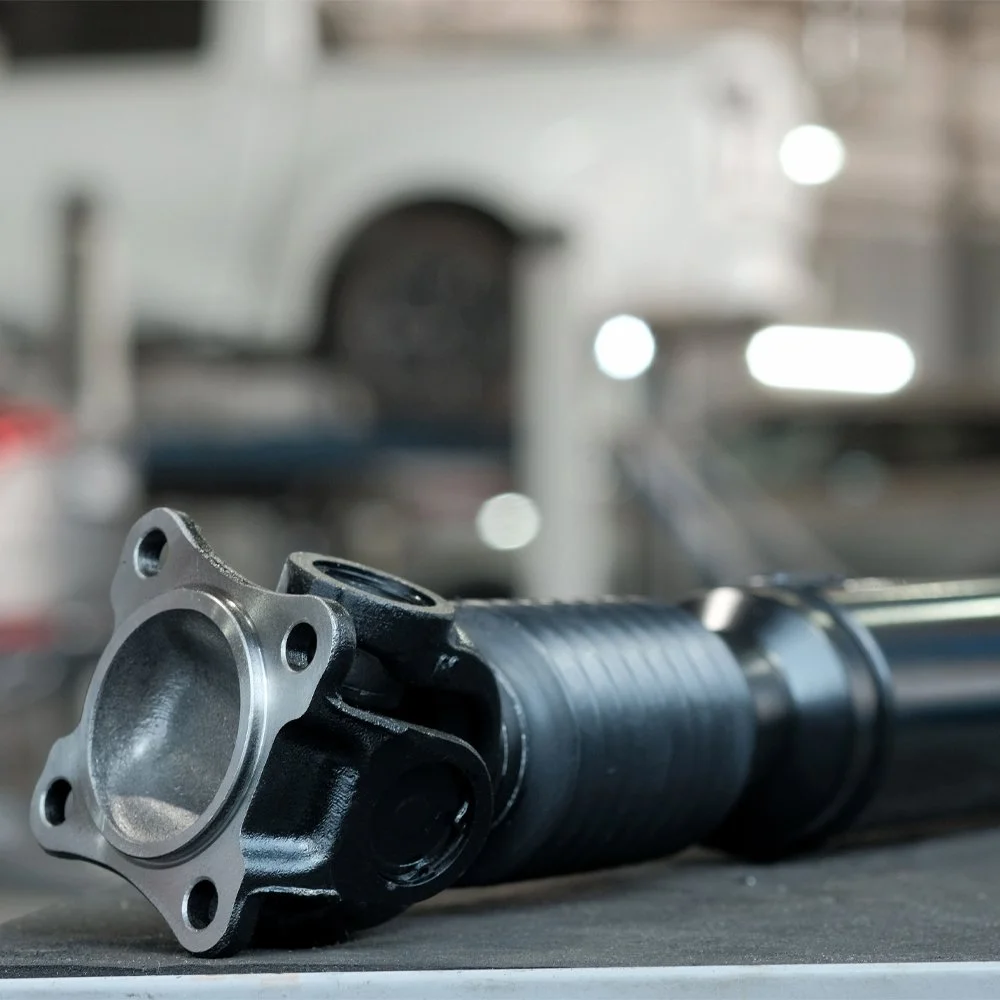
A propshaft transfers rotational power from the transmission to the differential, making it a critical component of a vehicle's driveline system.
What Causes Propshaft Problems?
A propshaft operates under continuous rotational force and must withstand changing speeds, loads and operating angles. In mining, transport, industrial and heavy-equipment applications, these demands can be particularly severe.
Common causes of propshaft problems include:
Worn universal joints
Failed centre bearings
Incorrect driveline angles
Poor lubrication
Damaged or bent propshaft tubing
Loose mounting components
Worn slip joints
Corrosion
Excessive loads
Incorrect installation
Propshaft imbalance
Impact damage from rough operating conditions
Wear may develop gradually through normal use or appear suddenly following an impact, overload or component failure.
Regular inspections and preventative maintenance can reduce the likelihood of unexpected breakdowns, but operators should also remain alert to changes in vibration, sound and performance.
1. Excessive Propshaft Vibration
Unusual vibration is one of the most common signs that a propshaft needs repair.
A correctly manufactured and balanced propshaft should rotate smoothly. When the shaft becomes damaged, worn or unbalanced, centrifugal forces can create vibration that is transmitted through the vehicle, machine or equipment.
The vibration may:
Increase as rotational speed rises
Become worse during acceleration
Be felt through the floor, chassis or controls
Appear only within a particular speed range
Become more noticeable under load
Possible causes of propshaft vibration include:
A bent propshaft tube
Missing balance weights
Worn universal joints
A damaged centre bearing
Incorrect propshaft alignment
Excessive play in the slip joint
Debris or material attached to the shaft
Incorrect driveline angles
Vibration should never be ignored. A rotating shaft that is out of balance can place additional stress on bearings, seals, gearboxes, differentials and mounting points.
Professional inspection and dynamic balancing may be required to identify and correct the cause.
2. Clunking or Knocking Noises
A clunking sound when accelerating, decelerating or changing direction may indicate excessive movement within the driveline.
This is often associated with worn universal joints, damaged splines or excessive play in the slip joint. The sound occurs when driveline components move suddenly as torque is applied or removed.
Operators may notice a clunk when:
Selecting a forward or reverse gear
Pulling away from a stationary position
Accelerating after coasting
Releasing the accelerator
Changing direction in mobile equipment
Applying power under load
Some driveline movement is normal, but a pronounced or repeated knocking sound should be investigated.
Ignoring the problem can allow worn components to deteriorate further. In severe cases, a universal joint or spline connection may fail completely.
3. Squeaking or Chirping Sounds
A repetitive squeaking or chirping sound may indicate a worn or poorly lubricated universal joint.
Universal joints allow the propshaft to transmit torque while operating through changing angles. Their bearing caps contain small needle bearings that require correct lubrication and protection from contamination.
When lubrication is lost or the bearings begin to wear, the joint may produce a squeaking sound that changes with rotational speed.
Common causes include:
Insufficient grease
Damaged seals
Water or dirt contamination
Corrosion
Seized needle bearings
Normal component wear
A universal joint may appear intact externally while internal wear is already developing. For this reason, unusual squeaking should not be dismissed without a proper inspection.
Replacing or rebuilding a worn joint early is usually far less disruptive than dealing with a complete driveline failure.
4. Vibration That Becomes Worse Under Load
Some propshaft problems become most noticeable when the vehicle or machine is carrying a heavy load or transmitting higher levels of torque.
For example, an operator may notice only minor vibration during light operation, but severe vibration when:
Climbing an incline
Hauling a heavy load
Accelerating hard
Operating mining or earthmoving equipment
Driving at higher speeds
Starting machinery under resistance
This can indicate wear or movement within the driveline that becomes more pronounced when torque increases.
Potential causes include:
Worn universal joints
Excessive spline wear
Propshaft imbalance
Damaged mounting points
Incorrect working angles
A failing centre bearing
A cracked or distorted shaft
Load-related vibration is particularly important in commercial and industrial applications because the propshaft may appear normal when the equipment is stationary or unloaded.
The shaft should therefore be assessed based on its behaviour under real operating conditions, not only during a visual inspection.
5. Worn or Failed Centre Bearing
Longer propshaft assemblies are often divided into multiple sections and supported by a centre bearing.
The centre bearing helps maintain shaft alignment and provides support while the propshaft rotates. When it becomes worn or damaged, the shaft may move excessively and create vibration, noise or instability.
Signs of centre bearing failure can include:
Vibration through the chassis
Rumbling noises
Knocking during acceleration
Visible movement in the shaft
Torn or damaged rubber support
Misalignment between propshaft sections
Uneven wear around the bearing
A failed centre bearing can affect the alignment of the complete propshaft assembly. This may place additional strain on universal joints, splines and transmission or differential connections.
Replacing the bearing alone may not always solve the underlying issue. The complete assembly should be checked for alignment, balance and related wear.
6. Visible Dents, Cracks or Bent Tubing
A propshaft should be visually inspected whenever impact damage is suspected.
Even a relatively small dent can affect the balance and structural integrity of the shaft. Because the propshaft rotates at high speed, minor physical damage may cause significant vibration.
Damage can result from:
Contact with rocks or debris
Off-road operation
Mining environments
Accidents
Incorrect lifting
Improper transport or storage
Equipment failure
Excessive loads
Previous poor-quality repairs
Warning signs may include:
Dented tubing
Cracks near welds
Distorted yokes
Damaged flanges
Missing balance weights
Corrosion
Twisted splines
Signs of contact with surrounding components
A damaged propshaft should not simply be straightened or welded without proper engineering assessment.
The shaft must maintain correct alignment, strength and balance. Poorly performed repairs can introduce additional stress and increase the risk of failure.
7. Grease Leaks or Dry Universal Joints
Grease around a universal joint may indicate that a seal has failed or that the joint has been incorrectly lubricated.
At the same time, a joint that appears completely dry may have lost its lubricant or may not have been serviced correctly.
Both conditions can lead to accelerated wear.
During inspection, maintenance teams should look for:
Grease thrown onto surrounding components
Damaged bearing-cap seals
Dry or rusty joints
Excessive movement
Stiffness or binding
Contamination around the joint
Missing grease fittings
Uneven movement through the joint’s operating angle
Lubrication requirements vary depending on the propshaft design and application. Some universal joints are serviceable, while others are sealed.
Applying additional grease will not repair a joint that is already worn or damaged. If play, binding or internal wear is present, the component will normally require replacement or professional rebuilding.
8. Shuddering During Acceleration
A shudder when pulling away or accelerating can indicate a driveline problem.
Unlike a constant vibration, shuddering may feel like a repeated shaking or pulsing sensation as torque moves through the propshaft.
Possible causes include:
Incorrect driveline angles
Worn universal joints
A damaged centre bearing
Excessive slip-joint wear
Misalignment
Loose mounting components
Propshaft imbalance
Gearbox or differential movement
Shuddering may be most noticeable at low speed when the vehicle or equipment first begins moving.
Because similar symptoms can also be caused by clutch, transmission, differential or engine-mount problems, accurate diagnosis is essential.
A driveline specialist can inspect the complete power-transmission system and determine whether propshaft repair is required.
9. Excessive Play in the Propshaft
A propshaft should not have excessive rotational or lateral movement.
Some controlled movement may be present within the driveline, but noticeable looseness can indicate wear in the universal joints, splines, slip joint, centre bearing or connection points.
Excessive play may be accompanied by:
Clunking noises
Delayed power delivery
Vibration
Uneven acceleration
Visible movement
Metal-to-metal contact
Worn flange or yoke connections
Inspection should only be performed when the equipment is safely isolated and cannot move or start unexpectedly.
Simply identifying movement is not enough. The source of the play must be located, as several components may contribute to the same symptom.
In industrial and heavy-equipment applications, excessive movement can quickly worsen under high torque.
10. Loss of Drive or Power Transmission
Complete or partial loss of drive is one of the most serious signs of propshaft failure.
If the propshaft, universal joint, spline or connecting component fails, power may no longer be transferred correctly between the transmission and the driven axle or machine component.
Possible signs include:
The engine runs but the equipment does not move
Sudden loss of propulsion
Loud impact or banging noise
A propshaft hanging below the vehicle
Severe vibration immediately before failure
Damage to nearby cables, hoses or components
Loss of drive to one or more axles
A broken propshaft can cause extensive secondary damage.
The rotating shaft may strike the chassis, gearbox, differential, floor, hydraulic lines or other components. In road vehicles, a detached shaft can also create a serious safety risk.
Equipment should be stopped immediately if a propshaft failure is suspected.
What Happens If Propshaft Problems Are Ignored?
Propshaft symptoms often begin as minor vibration, noise or movement. Continuing to operate the equipment can allow the original problem to damage other parts of the driveline.
Possible consequences include:
Universal joint failure
Centre bearing failure
Gearbox damage
Differential damage
Worn seals
Damaged mounting points
Cracked or broken propshaft tubing
Increased vibration throughout the machine
Unexpected downtime
Higher repair costs
Safety risks
The longer an unbalanced or damaged propshaft continues to rotate, the greater the strain placed on surrounding components.
For fleets, mines and industrial operations, unplanned downtime may be more costly than the repair itself. Early investigation can therefore protect both the equipment and the wider operation.
Can a Propshaft Be Repaired?
Many propshaft problems can be repaired, provided the assembly is assessed by an experienced driveline specialist.
The appropriate repair depends on the design, application and extent of the damage.
Propshaft repairs may include:
Replacing universal joints
Replacing centre bearings
Repairing or replacing slip joints
Replacing damaged tubing
Straightening suitable components
Repairing or replacing yokes
Replacing flanges
Correcting alignment
Restoring spline connections
Dynamic balancing
Manufacturing replacement components
Rebuilding the complete propshaft assembly
Not every shaft is suitable for repair. Severe structural damage, excessive corrosion or repeated fatigue may make replacement the safer and more economical option.
A proper inspection is needed before deciding whether to repair, rebuild or replace the propshaft.
Why Dynamic Balancing Matters
A propshaft must be correctly balanced to rotate smoothly.
Dynamic balancing identifies uneven mass distribution while the shaft is rotating. Adjustments are then made to reduce vibration and ensure stable operation.
Balancing may be required after:
Replacing propshaft tubing
Welding new components
Replacing yokes or flanges
Repairing impact damage
Rebuilding a multi-piece assembly
Correcting previous poor-quality repairs
Replacing a damaged component without balancing the complete shaft can leave the original vibration unresolved.
For this reason, balancing should form part of a comprehensive propshaft repair process where applicable.
When Should Equipment Be Stopped?
Equipment should be stopped and inspected immediately if there is:
Severe or rapidly increasing vibration
Loud knocking or banging
Visible propshaft damage
A loose or hanging shaft
Sudden loss of drive
Contact between the propshaft and surrounding parts
Evidence of a cracked joint, yoke or tube
Significant movement at a centre bearing
A burning smell or excessive heat near driveline components
Continuing to operate equipment with these symptoms may cause a complete failure.
Where symptoms are minor, the machine should still be scheduled for inspection as soon as possible. Maintenance teams should not rely on sound or vibration alone to determine whether continued operation is safe.
Preventing Propshaft Failure
Not every failure can be prevented, but regular maintenance can significantly reduce risk.
A preventative maintenance programme should include:
Visual propshaft inspections
Universal joint lubrication where required
Checking for excessive play
Inspecting centre-bearing supports
Monitoring vibration
Checking mounting bolts and flanges
Inspecting slip joints and splines
Looking for dents, cracks and corrosion
Confirming correct driveline angles
Investigating new noises promptly
Checking balance after major repairs
Recording recurring driveline problems
Operating conditions should also influence inspection frequency.
Mining equipment, heavy commercial vehicles and industrial machinery exposed to dust, water, impacts and high loads may require more frequent checks than equipment used in lighter conditions.
Professional Propshaft Repair from Propshaft Master
Propshaft problems require more than a quick visual check.
Accurate diagnosis involves assessing the complete assembly, including the shaft tubing, universal joints, centre bearings, slip joints, flanges, splines, alignment and balance.
Propshaft Master provides propshaft repair, custom manufacturing and driveline engineering solutions for a wide range of applications across Southern Africa.
The team supports industries including:
Mining
Transport
Rail
Marine
Agriculture
Earthmoving
Heavy industry
Commercial fleets
Industrial machinery
Depending on the condition of the assembly, the repair process may involve component replacement, tube replacement, alignment correction, machining, welding and dynamic balancing.
The objective is not simply to remove the immediate symptom, but to restore reliable power transmission and reduce the risk of repeat failure.
Final Thoughts
The most common signs that a propshaft needs repair include vibration, knocking, squeaking, shuddering, centre-bearing wear, visible damage and excessive movement.
These symptoms should not be treated as normal characteristics of an ageing vehicle or machine. They are often early warnings that a driveline component is worn, damaged or incorrectly aligned.
Prompt propshaft repair can help prevent secondary damage, reduce downtime and extend the service life of surrounding components.
If your vehicle, machine or equipment is showing signs of propshaft vibration, noise or driveline instability, arrange a professional inspection before the problem develops into a complete failure.
FAQs
-
Propshafts can fail due to worn universal joints, damaged centre bearings, incorrect driveline angles, poor lubrication, impact damage, corrosion, excessive loads or imbalance. Regular inspections and maintenance help reduce the risk of failure.
-
Yes. Many propshafts can be repaired by replacing worn components such as universal joints, centre bearings or tubing, followed by alignment and dynamic balancing. Severe damage may require complete replacement.
-
A damaged propshaft may produce clunking, knocking, squeaking or rumbling noises, particularly during acceleration, deceleration or gear changes. These sounds often indicate worn driveline components.
-
It is not recommended. Continuing to operate equipment with a damaged propshaft can lead to complete driveline failure, damage to surrounding components and increased repair costs.
-
Propshaft vibration is commonly caused by imbalance, worn universal joints, bent tubing, incorrect alignment, damaged centre bearings or excessive wear in the slip joint.
-
Inspection frequency depends on the application. Mining, industrial and commercial vehicles operating in harsh environments should have propshafts inspected as part of their regular preventative maintenance programme.
Keep Your Driveline Performing at Its Best
At Propshaft Master, we specialise in professional propshaft repairs, custom manufacturing, dynamic balancing and complete driveline solutions for the mining, transport, industrial, rail and marine sectors across Africa. Whether you require preventative maintenance or emergency repairs, our experienced team is ready to help keep your operations moving.